
Heat Transfer Vinyl and Specialty Finishes
Cut vinyl for names, numbers and solid marks, plus reflective and raised finishes. The method that does what thread and screens cannot.
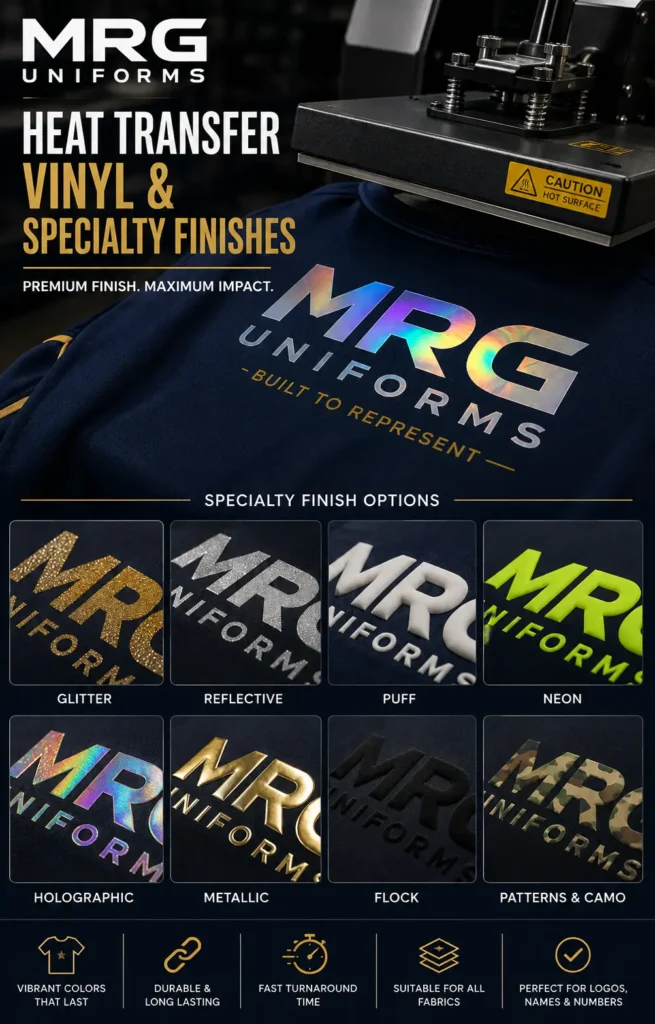
What Vinyl Is Genuinely Best At
Heat transfer vinyl, usually shortened to HTV, is coloured film cut to shape, weeded by hand and pressed onto the garment. It is not a general purpose printing method and we do not pretend otherwise. Its value is narrow and real: individual names, squad numbers, size markings and simple solid colour marks, applied one garment at a time with no setup.
That makes it the natural partner to other methods rather than a competitor. A sublimated jersey with vinyl numbers, or an embroidered work shirt with a vinyl name strip, are both normal combinations. Where vinyl fails is detail and colour count, because every colour is a separate cut layer and fine artwork simply cannot be weeded.
The Specialty Vinyls Worth Knowing
Reflective vinyl
Returns light to its source, which is what makes a wearer visible to a driver at night. Used for name strips and markings on night shift and roadside workwear where the garment itself already carries certified tape.
Glow vinyl
Charges under light and glows in darkness. Genuinely useful for emergency and evacuation marking, and used decoratively for events. It is not a substitute for certified reflective material.
Silicone and high density
A raised rubberised mark with a sharp edge, closer to a moulded badge than a print. Popular on sportswear and premium promotional wear where a flat print looks cheap.
Foil and metallic
Reflective sheen for retail and hospitality branding. Best on garments that are not laundered daily, since the finish is more delicate than standard vinyl.
Flock
A soft raised velvet texture. Used where a logo should be felt as well as seen, typically on promotional and merchandise garments.
Standard HTV
Flat solid colour film in a wide colour range. The workhorse for names, numbers and simple marks on almost any fabric.
An Important Limit on Safety Garments
Reflective vinyl and certified retroreflective tape are not the same thing. Vinyl is decoration that happens to reflect. The tape on a high visibility garment is a tested component of its EN ISO 20471 class rating, and adding reflective vinyl does not raise a garment to a higher class or compensate for insufficient certified area.
The same caution applies to flame resistant workwear. Vinyl is a plastic film and is not FR rated, so it should not be applied to a certified FR garment. Identification on those garments belongs in FR certified aramid thread instead, which we hold in stock.
We will tell you this before production rather than after, because a garment that fails an inspection is a bigger problem than a name strip.
Use vinyl for
- Player and staff names
- Squad and team numbers
- Size and department markings
- Simple solid colour marks
- Short runs and one offs
Where We Use It
Common applications
Compare methods
- Sublimation, for full kit designs
- DTF printing, for full colour artwork
- Embroidery, for durable professional logos
- All customization methods
For teams, vinyl is usually combined with another method rather than used alone. See sportswear and service uniforms for typical setups.
Vinyl and Heat Transfer FAQs
What is heat transfer vinyl used for?
Names, numbers, size markings and simple solid colour marks. It is applied one garment at a time with no setup cost, which makes it the practical choice for individual personalisation rather than for logos across a whole order.
Can vinyl reproduce a detailed logo?
No. Each colour is a separate cut layer that has to be weeded by hand, so fine detail and multi colour artwork are not viable. For that, DTF printing handles unlimited colours and photographic detail at one price.
Is reflective vinyl the same as certified reflective tape?
No, and the difference matters. Certified retroreflective tape is a tested component of a garment EN ISO 20471 rating. Reflective vinyl is decoration that reflects, and adding it does not raise a garment to a higher visibility class.
Can you apply vinyl to flame resistant workwear?
We would advise against it. Vinyl is a plastic film and is not FR rated, so it can compromise the certification the garment was bought for. Identification on FR garments should use FR certified aramid thread embroidery instead.
How durable is vinyl on uniforms?
Good under normal washing when correctly applied. Wash inside out, avoid ironing directly over it, and expect it to wear faster than embroidery under repeated high temperature commercial laundering.
What is the minimum order for vinyl?
There is no meaningful minimum. Since each piece is cut and pressed individually, a single garment or a handful of personalised items is entirely normal.
Names, numbers or something specialist?
Send the garment and the list. We will confirm the finish, and flag it if the garment is certified and vinyl is the wrong answer.