
Chef Uniforms and Aprons
Kitchen and service wear built for heat, steam and long shifts. Made in Ajman, from 10 pieces, 3 to 4 days under 100 pcs and 3 to 7 on bulk.
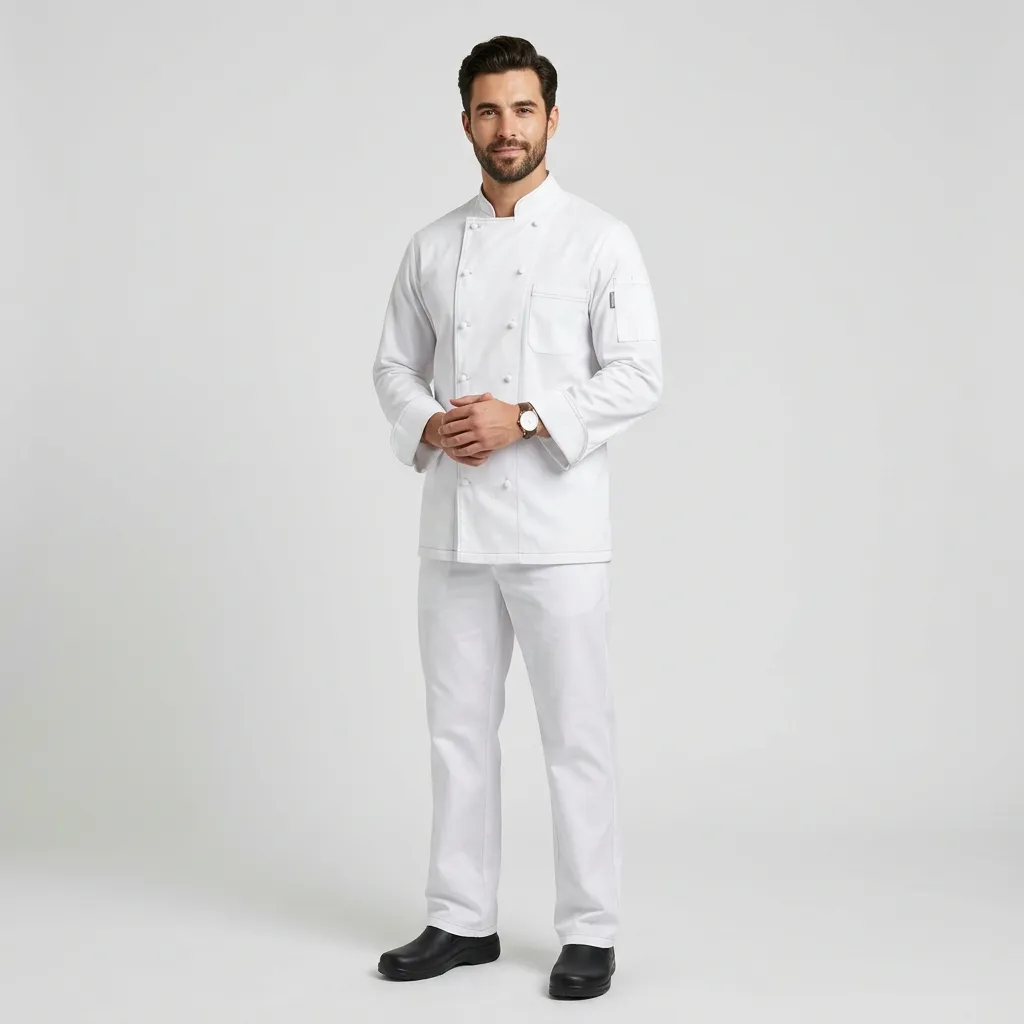
kitchen and service garments
piece minimum order
days under 100 pcs, 3 to 7 on bulk
A Kitchen Is the Hardest Place to Dress
A commercial kitchen in the UAE combines ambient heat with equipment heat, steam, oil and a laundry cycle that runs daily at high temperature. Chef whites also have to look clean at a pass that guests can often see. Very few garments face both demands at once.
Why cotton wins here
Cotton and cotton rich blends breathe far better than polyester, which matters more beside a range than anywhere else in hospitality. The trade off is creasing, and in a kitchen that is a fair price to pay.
Double breasted for a reason
The traditional chef jacket front is reversible so a stained panel can be swapped over mid service. The double layer across the chest is also a heat and splash barrier, not a styling choice.
Stains are the real test
Whites are judged on how they wash, not how they look new. Fabric quality and colour fastness decide whether a jacket still looks presentable after fifty washes or goes grey.
Browse Kitchen and Service Wear
Every garment is made to order and can carry your restaurant or hotel logo.
Chef wear
Fitting out a whole venue? See the hospitality uniform set or the full hospitality uniforms range.
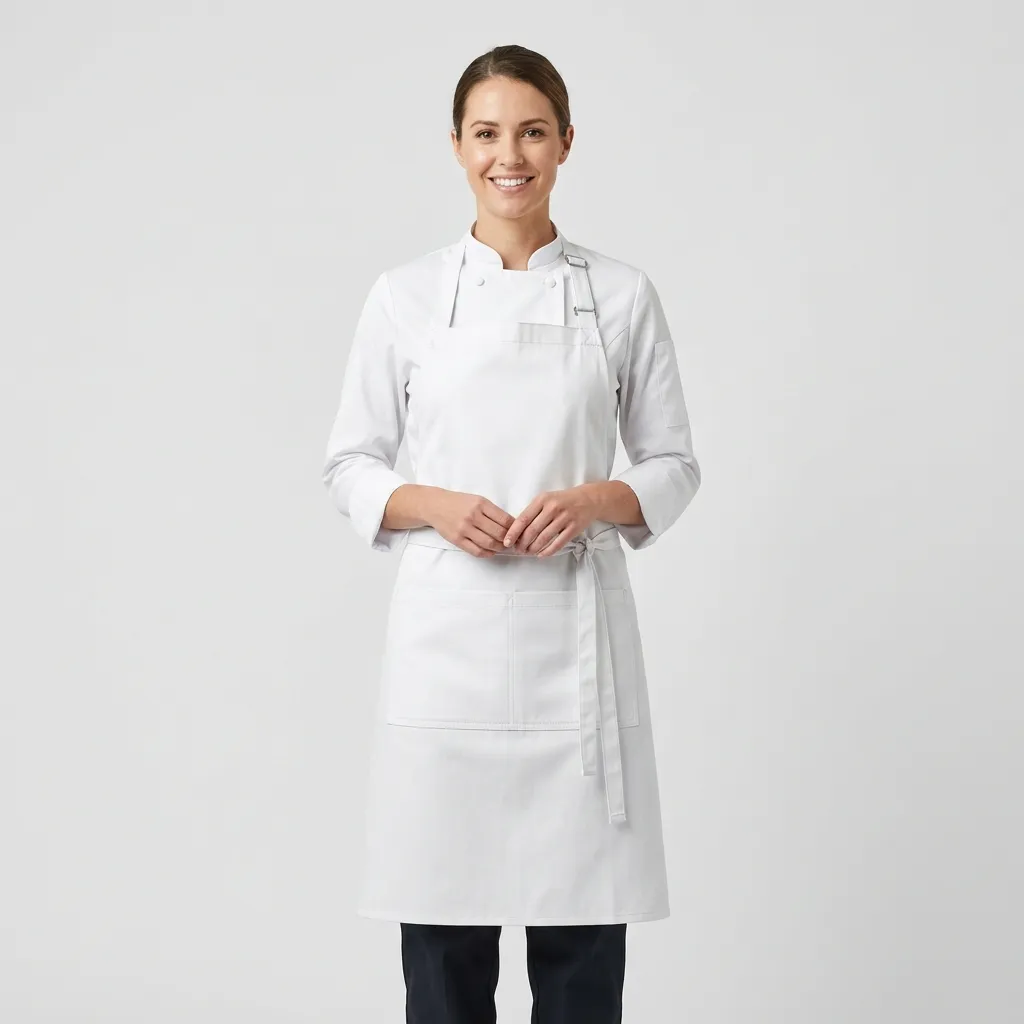
Branding Chef Wear and Aprons
Front of house garments are seen at conversational distance, so finish quality registers immediately. Embroidery is the right call for chef jackets and manager wear, usually a left chest logo or a collar band, with the chef name below it. From 10 pieces, so a single restaurant can name every jacket.
Aprons take embroidery or DTF equally well, and DTF makes sense when the design is colourful or the run is short, such as a seasonal menu launch or a pop up. See all branding options.
Specifying Kitchen Uniforms
Before you order
- Separate kitchen and front of house specifications, the requirements are genuinely different
- Order more aprons than staff, they are changed more often than any other item
- Decide whether chef names are embroidered individually or the jackets stay pooled
- Request a size set, chef jacket fit varies widely between manufacturers
- Confirm the white you choose will still be available for reorders
Care and replacement
- Treat oil stains before washing rather than after drying
- Wash whites separately from coloured front of house wear
- Expect a shorter replacement cycle on whites than on any other uniform
- Wash inside out to protect embroidered logos and chef names
Chef Uniform FAQs
What fabric is best for chef jackets in the UAE?
Cotton or a cotton rich blend. Breathability matters more beside a range than anywhere else in hospitality, and polyester traps heat. The trade off is creasing, which is a fair exchange in a working kitchen.
Why are chef jackets double breasted?
The front is reversible, so a stained panel can be swapped over mid service. The double layer across the chest also acts as a heat and splash barrier. It is a practical design rather than a traditional one.
What is the minimum order for chef uniforms?
Ten pieces for embroidered garments. That suits a single restaurant or cafe as easily as a hotel group, and it means individual chef names can be added without a large minimum.
Can you embroider chef names on jackets?
Yes, and at our 10 piece minimum it is practical even for a small kitchen. The usual layout is a restaurant logo on the left chest with the chef name below it.
What is the difference between a bib apron and a waist apron?
A bib apron covers the chest and torso and suits kitchen work where splashing is likely. A waist apron covers from the waist down and is normally used front of house, where it is lighter and easier to change between services.
How many aprons should we order per person?
More than one each. Aprons are changed far more often than jackets, so ordering a ratio of two or three per member of staff avoids a shortage between laundry cycles.
Do you supply front of house and kitchen uniforms together?
Yes, and we recommend specifying them separately even in one order. Kitchen wear is chosen for heat and durability, front of house for appearance at close range.
Opening a venue or refreshing a kitchen?
Send the roles and headcount. We will separate kitchen from front of house, recommend fabric for each, and send swatches before you commit.