
Coveralls and Safety Workwear
Industrial workwear built for UAE heat, abrasion and compliance. FR certified thread held in stock, from 10 pieces, 3 to 4 days under 100 pcs and 3 to 7 on bulk.
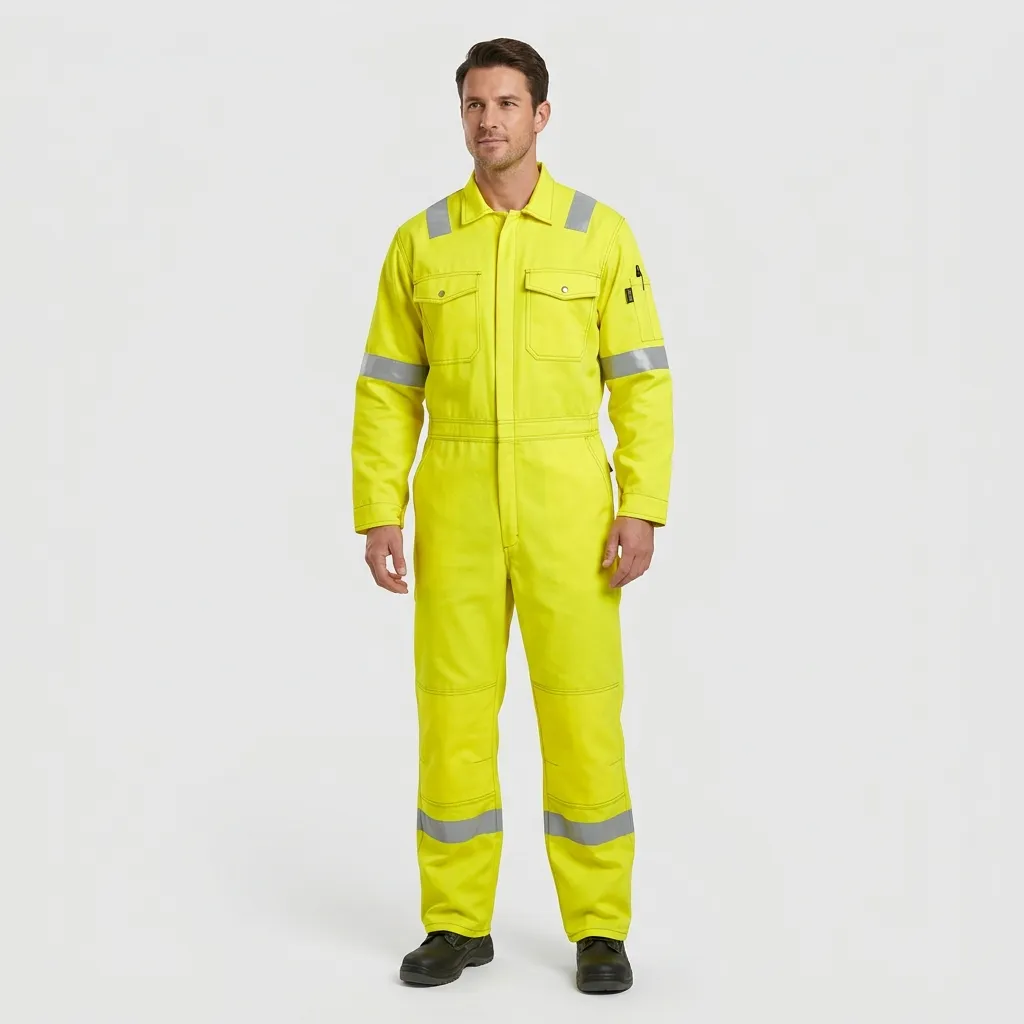
industrial garments in the range
piece minimum order
days under 100 pcs, 3 to 7 on bulk
With Safety Workwear, the Certification Is the Product
Every other uniform decision is about comfort, appearance and cost. Here the garment is protective equipment, and specifying it wrong is a liability question rather than a complaint about fit.
Two things catch buyers out. Flame resistance can be inherent to the fibre or a chemical treatment, and treated fabric loses its rating after a stated number of washes while inherent fabric does not. Ask which you are being sold, and how many wash cycles it is rated for. Second, branding affects compliance: standard polyester thread on an FR coverall can compromise its rating under NFPA 2112 or EN ISO 11612, and an oversized back logo can drop a high visibility garment below its EN ISO 20471 class by covering certified fluorescent area.
We hold FR certified aramid thread and emblems in stock, and we plan logo placement around the certification rather than after it.
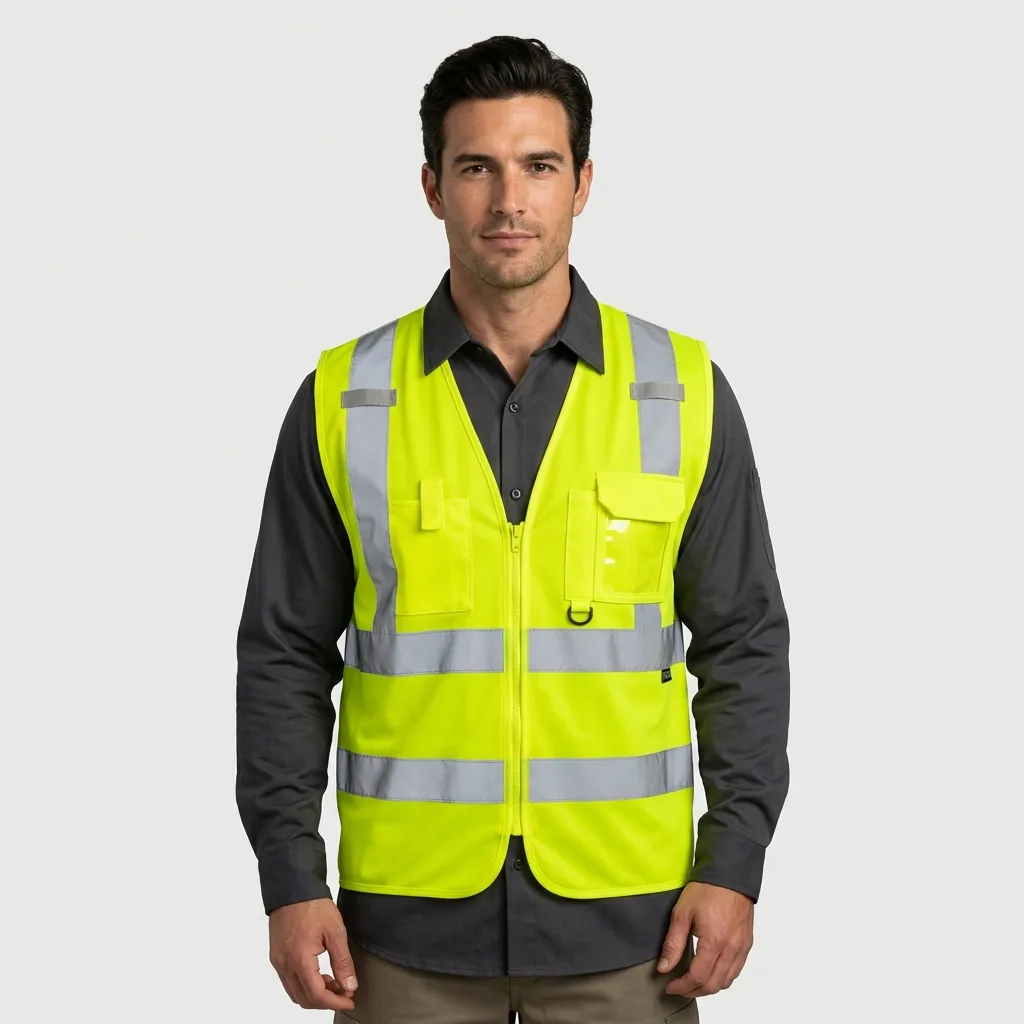
Browse Industrial Workwear
All garments are made to order and can be branded with FR certified thread where the application requires it.
Coveralls and suits
Hi vis and vests
Workwear by Trade
Different trades face different risks, and the specification should follow the hazard rather than the job title.
Energy and heavy industry
Engineering and maintenance
Logistics and production
Specifying Workwear for UAE Conditions
Fabric and weight
- TC twill from around 220 GSM upward for general industrial use
- Heavier fabric lasts longer but traps more heat, so the honest answer outdoors is the lightest compliant option
- Coveralls take more abrasion at knees and seat than anywhere else, which is where reinforcement matters
- See the industrial uniforms range for full sets
Fit, care and replacement
- Coveralls are worn over other clothing, so size over the layers actually worn
- Follow FR wash instructions exactly, incorrect laundering can reduce protection
- Reflective tape degrades before the fabric does, so inspect tape rather than waiting for the garment to fail
- Plan replacement cycles rather than replacing on visible wear
Safety Workwear FAQs
Is your FR fabric inherent or treated?
Both are available and they behave differently. Treated fabric loses its flame resistance after a stated number of wash cycles, while inherent fabric keeps it for the life of the garment. Tell us the application and wash frequency and we will recommend which is appropriate, along with the standard it is certified to.
Can you embroider a logo on FR coveralls?
Yes, using FR certified aramid thread and emblems which we hold in stock. Standard polyester thread is not FR rated and can compromise a garment arc rating under NFPA 2112 or EN ISO 11612, so it should never be used on certified workwear.
Will a back logo affect high visibility certification?
It can. EN ISO 20471 class depends on how much certified fluorescent and retroreflective area the garment carries, and a large logo placed over that area reduces it. We plan placement around the certification rather than applying branding afterwards.
What fabric weight should industrial workwear be?
TC twill from around 220 GSM upward suits most general industrial use. Heavier fabric lasts longer but retains more heat, which matters in UAE summer conditions, so outdoor roles are usually better served by the lightest option that still meets the requirement.
What is the minimum order for coveralls?
Ten pieces for embroidered garments. Small contractors and single site operations are a normal part of our work, not an exception.
How should FR workwear be laundered?
Exactly as the manufacturer specifies. Incorrect laundering, particularly the use of fabric softeners or bleach on some fabrics, can reduce the protection the garment provides. Get the wash instructions in writing at the point of purchase.
How often should reflective workwear be replaced?
Inspect the reflective tape rather than the fabric. Tape typically degrades and loses retroreflectivity before the garment itself wears out, and a hi vis garment with failed tape no longer performs its function even if it looks serviceable.
Tell us the hazard, not just the headcount
Flame, arc, visibility, abrasion or heat. We will specify a compliant garment, confirm the standard it meets, and brand it without compromising the certification.