
High Visibility Fabric and Tape
Two components do the work, and they perform at different times of day. Understanding that is what stops a hi vis order from failing an inspection.
What Makes a Garment High Visibility?
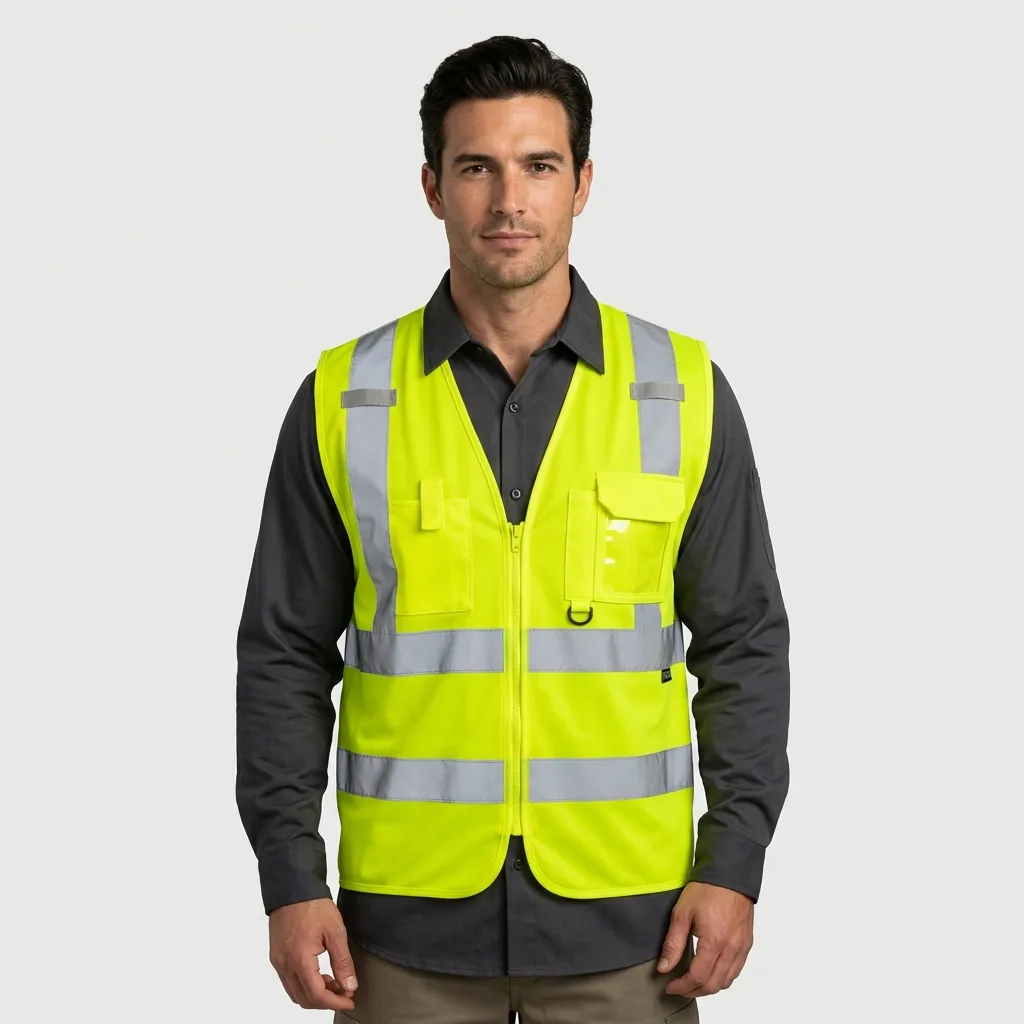
A high visibility garment is two materials doing two different jobs. Fluorescent background fabric in yellow, orange or red converts ultraviolet light into visible light, which is what makes it appear to glow in daylight, dawn and poor weather. Retroreflective tape returns light straight back to its source, so a driver sees it lit by their own headlights at night. Each covers conditions the other cannot, so a compliant garment needs both. Under EN ISO 20471 the class is set by how much certified area the garment carries, not by how bright the colour is. Class 3 normally requires sleeves and is the usual expectation for roadside and night work. Adding reflective vinyl does not raise a class, and a large printed logo placed over fluorescent fabric reduces the certified area.
Fluorescent by Day, Retroreflective by Night
A high visibility garment is made of two different materials doing two different jobs. The fluorescent background converts ultraviolet light into visible light, which makes the wearer stand out in daylight and at dusk. It does nothing in the dark.
The retroreflective tape returns light straight back towards its source, which is what makes a wearer appear in a vehicle headlight at night. It does very little in daylight. A garment needs both, in certified quantities, which is why neither a plain orange shirt nor a strip of tape on a dark coverall is compliant on its own.
The Classes Under EN ISO 20471
The class is determined by how much certified fluorescent and retroreflective area the garment carries. More area means a higher class, and the class required depends on the traffic speed and environment the wearer is working in.
Class 1
The lowest certified level, carrying the least material. Suited to low risk environments away from moving vehicles, such as controlled yards and internal warehouse areas.
Class 2
An intermediate level, typically a vest or short sleeve garment with more coverage. Common for site work, logistics yards and roles around slow moving plant.
Class 3
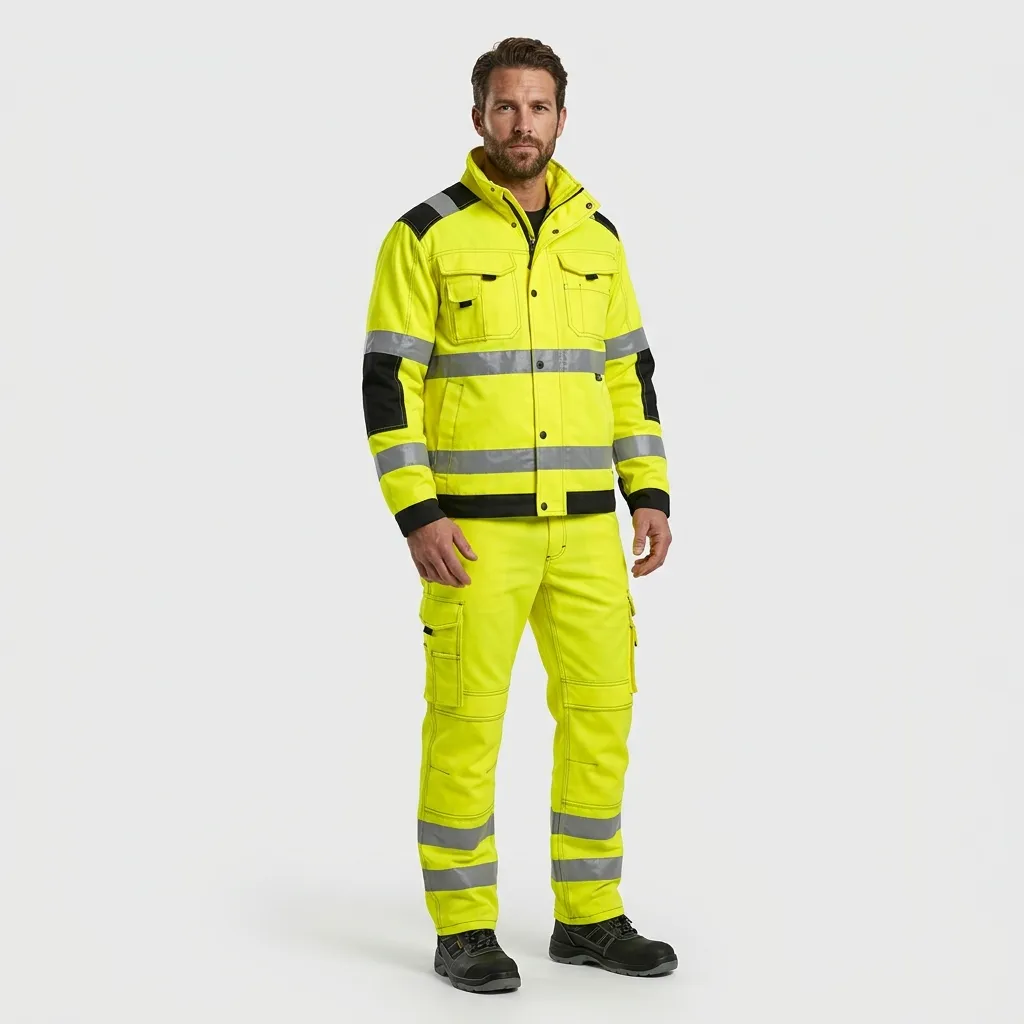
The highest level, requiring sleeves and the greatest certified area. Required for high speed roadside work and night operations where a driver needs the longest possible reaction time.
A common mistake is layering. A class 2 vest worn over a non certified jacket does not make the wearer class 3, and if the jacket covers the vest it can reduce visibility rather than add to it. Where a jacket is needed on a certified site, the jacket itself should be certified.
How Logos Reduce a Garment Class
Every square centimetre of logo placed over fluorescent background material subtracts from the certified area the class rating depends on. A large company name across the back of a class 3 jacket can quietly drop it below the threshold, and nothing about the garment looks different afterwards.
We plan placement around the certification rather than applying branding afterwards. That usually means smaller marks positioned on non certified panels, or identification carried on the tape line rather than across it. On garments that are also flame resistant, branding uses FR certified aramid thread, since standard thread is not FR rated.
Reflective vinyl is decoration, not certification. Adding it does not raise a garment to a higher class or compensate for insufficient certified area.
What Wears Out First
The tape, not the fabric
Retroreflective tape loses performance before the cloth wears out. Cracking, lifting at the edges and a dulled surface all reduce return, and a garment can look serviceable while no longer performing at night. Inspect the tape rather than the fabric when deciding replacement.
The colour, from washing and sun
Fluorescent dye fades with UV exposure and repeated laundering, and faded fluorescent material no longer meets the standard even if it still looks bright to the eye. Both effects are accelerated in UAE conditions, so replacement cycles here are shorter than in cooler climates.
Plan replacement on a schedule rather than on visible wear. See coveralls and safety workwear for the garment range, FR fabric where flame risk also applies, or industrial uniforms for full programmes.
High Visibility Garments We Make
High Visibility FAQs
What is the difference between fluorescent and reflective?
Fluorescent background material makes the wearer visible in daylight by converting UV into visible light, and does nothing in the dark. Retroreflective tape returns light to its source so the wearer appears in headlights at night, and does little in daylight. A compliant garment needs both.
Which high visibility class do we need?
It depends on traffic speed and environment. Class 1 suits low risk areas away from moving vehicles, class 2 covers most site and logistics work, and class 3 is required for high speed roadside and night operations. Tell us the environment and we will specify against it.
Does a logo affect the certification?
It can. Class depends on the certified fluorescent and retroreflective area, and a logo placed over that material subtracts from it. A large back logo can drop a garment below its class, so placement should be planned around the certification rather than added afterwards.
Can I wear a normal jacket over a hi vis vest?
Not on a certified site. A non certified jacket covering the vest reduces visible area rather than adding to it, and layering does not raise the class. Where a jacket is needed, the jacket itself should be certified.
How often should high visibility workwear be replaced?
Judge it on the tape rather than the fabric. Retroreflective tape degrades before the cloth wears out, and fluorescent colour fades with UV and washing. Both happen faster in UAE conditions, so plan replacement on a schedule rather than waiting for visible wear.
Can a garment be both flame resistant and high visibility?
Yes, and where both hazards apply the garment must satisfy each standard independently. Branding on those garments uses FR certified aramid thread and is placed to preserve the certified visible area.
Tell us the environment, not just the colour
Traffic speed, day or night working, and whether flame risk also applies. We will specify the class and plan branding so the certification holds.
Related Guides
Part of our uniform fabric guides. See also FR fabric and coveralls and safety wear.